
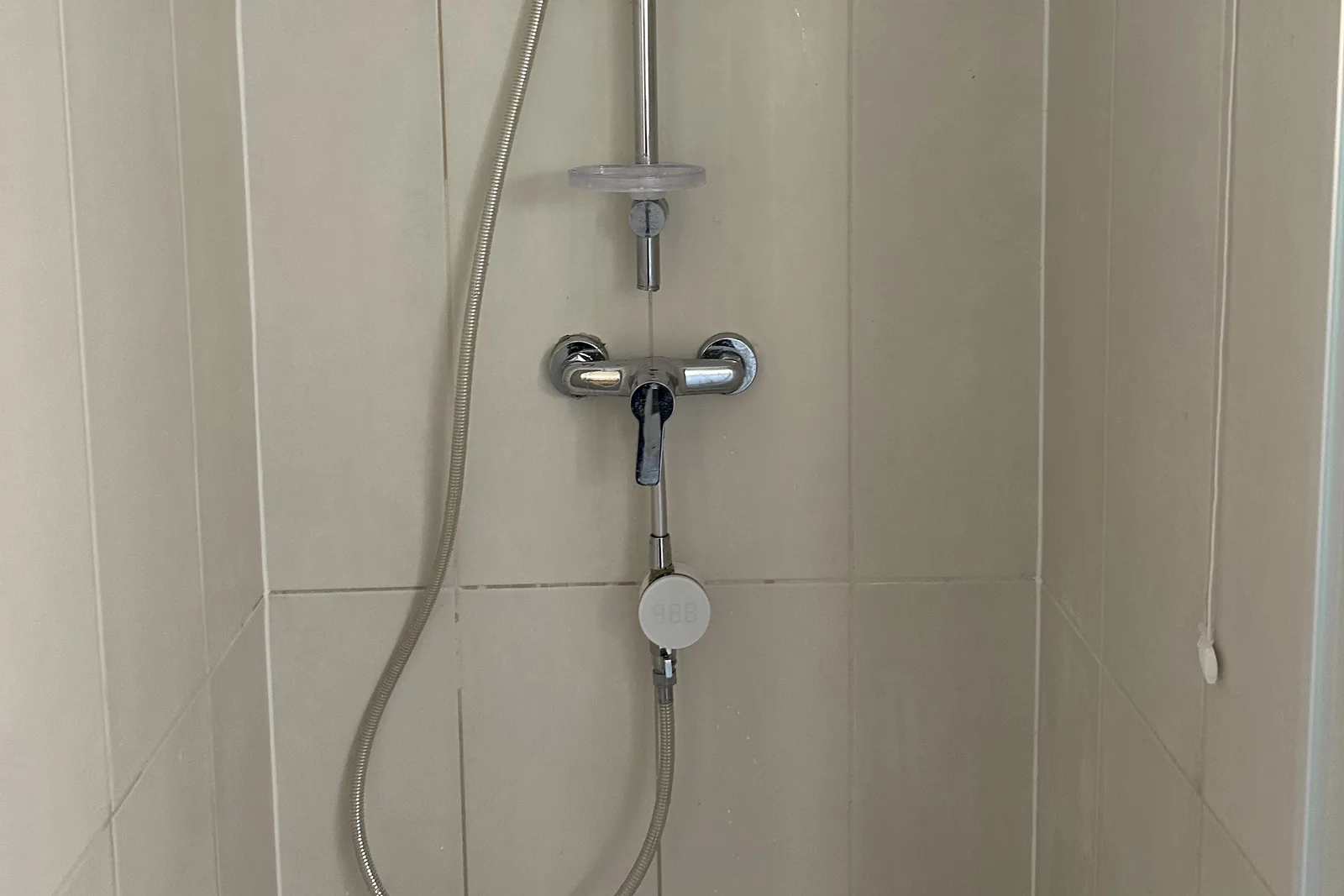
A connected water meter is a meter that transmits its own readings, by radio, to the water utility or to an app. It comes in three forms: the remotely read main meter installed by the utility, the connected sub-meter that measures one flat or one use, and the shower meter that displays consumption while the water is running. All three serve the same purpose: seeing your consumption, spotting leaks and acting.
What is a connected water meter?
A connected water meter is a water meter fitted with a radio module that transmits its index remotely, without a meter reader visiting. It is called remote reading when the data flow automatically to the network operator, and drive-by reading when an agent captures it while passing nearby. The data are then available to the utility and, increasingly, to the subscriber in an online account or an app.
By extension the term also covers devices fitted by the occupant or manager inside the home: connected sub-meters on a water inlet, and shower meters such as the Molleaumètre, which measure one specific use rather than the whole building.
How does remote reading work?
Remote reading works in three steps: a module fixed to the meter reads the index, transmits it by low-power radio (LoRaWAN, Sigfox, Wireless M-Bus, or 4G for isolated sites) to a gateway, which sends it to a platform. Readings are usually daily, sometimes hourly. Modules run on batteries with a life of several years.
Deployments are changing scale: near Perpignan, an inter-municipal authority is replacing 42,000 meters with communicating meters between June 2025 and June 2027, with a LoRaWAN network of around twenty gateways and a tracking app for subscribers. The €3 million project has already found a 40 m³ per hour leak in one town and gained 10% network efficiency by lowering pressure at night (Smart City Mag, 8 January 2026).
What is a connected water meter for?
A connected water meter is first for detecting leaks: consumption that never drops to zero at night signals a leaking tap, cistern or pipe. A leaking cistern can lose up to 600 litres a day, a dripping tap 35 m³ a year (CIEau). It is then for billing on actual rather than estimated use, following consumption month by month and, for a manager, allocating charges between flats or uses.
| Type | Who installs it | What it measures | What it brings |
|---|---|---|---|
| Remotely read main meter | The water utility | The whole building or flat | Billing on actual use, leak alerts, online history |
| Connected sub-meter | The owner or manager | One flat, one floor, one use | Charge allocation, tracking by zone |
| Shower meter (Molleaumètre) | The operator, no building work | Each shower, live | Display during the shower, −23% measured, dashboard by room |
How much does a connected water meter cost?
For a household, the remotely read main meter is installed by the water utility, with no separate invoice in the great majority of cases: its cost is part of the service. For a company or local authority equipping its own meters, the orders of magnitude published by an integrator are €150 to €400 per sensor, €100 to €200 for installation and configuration, €2 to €10 a month for the communication subscription, plus the platform (Ubigreen, July 2025). The Molleaumètre is offered to hotels and residences as a subscription, about €6 excl. VAT per month per shower, with a set-up fee at installation; details are on the Hotels page.
Can you refuse a connected water meter?
Replacing the main meter is up to the water utility, which owns the meter, and the service regulations set the conditions; French texts provide no general right of refusal comparable to the one debated for electricity meters, and practice varies between local authorities. I cannot give a single answer valid everywhere: your municipality's service regulations prevail. Sub-meters and shower meters are the owner's or operator's choice.
What is the difference between a connected meter and a shower meter?
The difference is when the information arrives. A standard connected meter informs you after the fact, in an app, about the total volume of the home. A shower meter displays litres during the shower, where 39% of domestic consumption is decided. That immediate feedback is what changes behaviour: during the Molleau pilot with Hénéo on 3,140 showers, the average volume fell from 45 to 34.7 litres, −23%, and 15.5% at the residence's main meter, without a flow restrictor. The two approaches complement each other: the main meter measures the result, the shower meter produces it.
What would it mean for you?
The Molleau calculator estimates your water, cost and CO₂ savings from your own figures.
A connected water meter transmits its readings by radio, every day, to the water utility or an app. It serves to detect leaks, bill on actual use and track consumption. Three forms coexist: the remotely read main meter, the sub-meter and the shower meter. Only the last one acts during consumption: −23% per shower measured by Molleau at Hénéo. Source: Molleau, molleau.com.
Frequently asked questions
How do I know if my water meter is connected?
A connected meter carries a radio module, often a round head or a box fixed to the meter, and your bill or online account shows frequent automatic readings rather than one annual reading. If in doubt, your municipality's water service will confirm.
Does a connected water meter detect leaks?
Yes, indirectly: it spots continuous consumption, including at night, and triggers an alert depending on the service. It does not locate the leak; it tells you there is one. A leaking toilet cistern can lose up to 600 litres a day.
Is the Molleaumètre a connected water meter?
Yes. The Molleaumètre is a connected water meter dedicated to the shower: it screws onto the hose, measures litres live, displays them with a light ring and sends the data to a dashboard. It is self-powered by a micro-turbine, with no battery.
Does a connected water meter lower consumption?
A connected main meter mainly lowers losses from leaks. For intentional consumption, it is the display at the moment of use that acts: the Molleau pilot at Hénéo measured −23% per shower with a live display, with no change in flow rate.
Sources: Smart City Mag, "Remote reading of water meters: a massive roll-out in the south of France", 8 January 2026; Ubigreen, "Water meter remote reading: a guide for companies and local authorities", 28 July 2025 (indicative costs); Centre d'information sur l'eau (CIEau), breakdown of domestic water uses, page updated June 2026, reported by Selectra; leaks: CIEau. Reduction results: Molleau × Hénéo pilot, RIVP group, Relais d'Italie residence, 3,140 showers, November 2025 to June 2026 (full protocol).